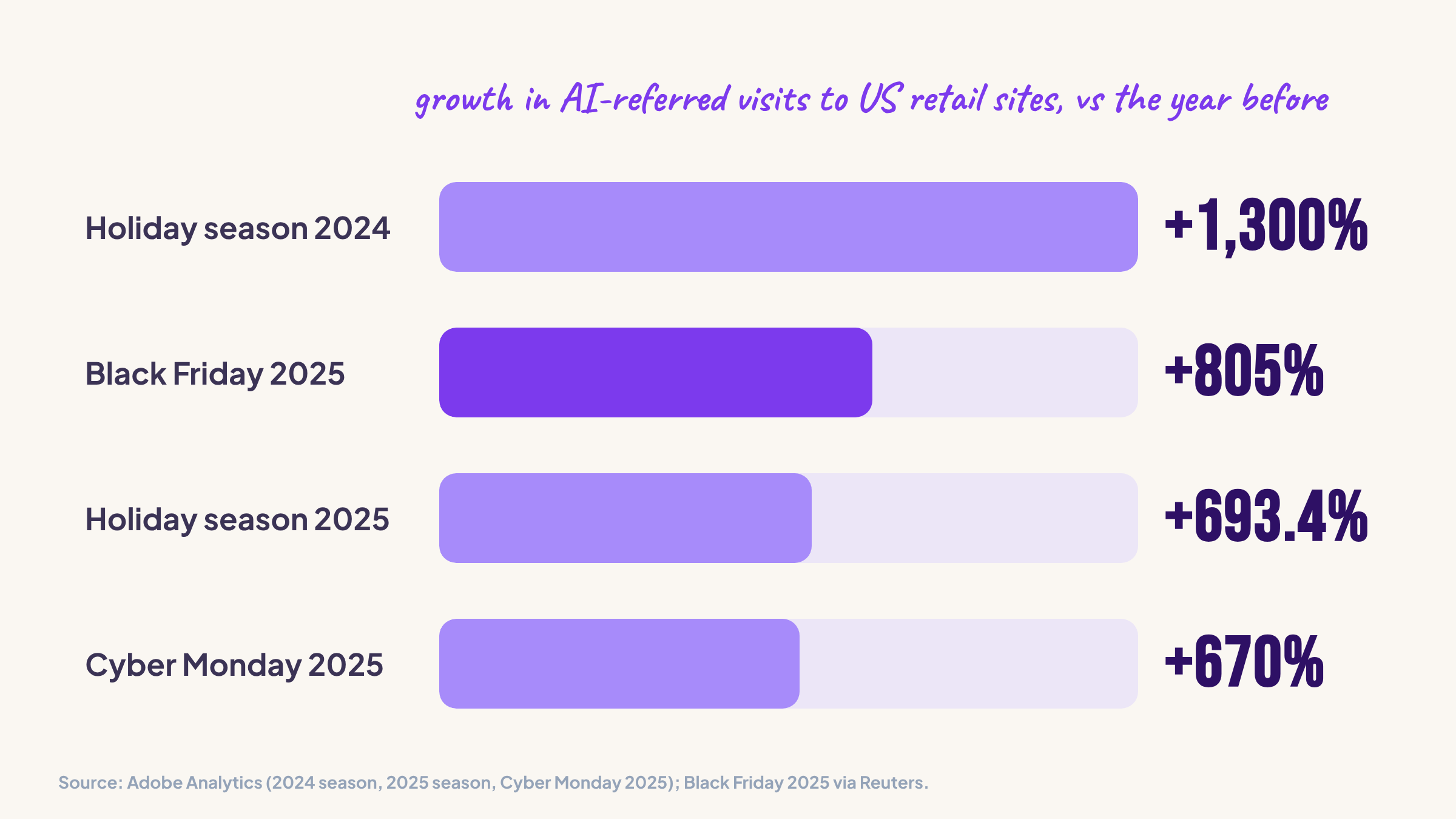
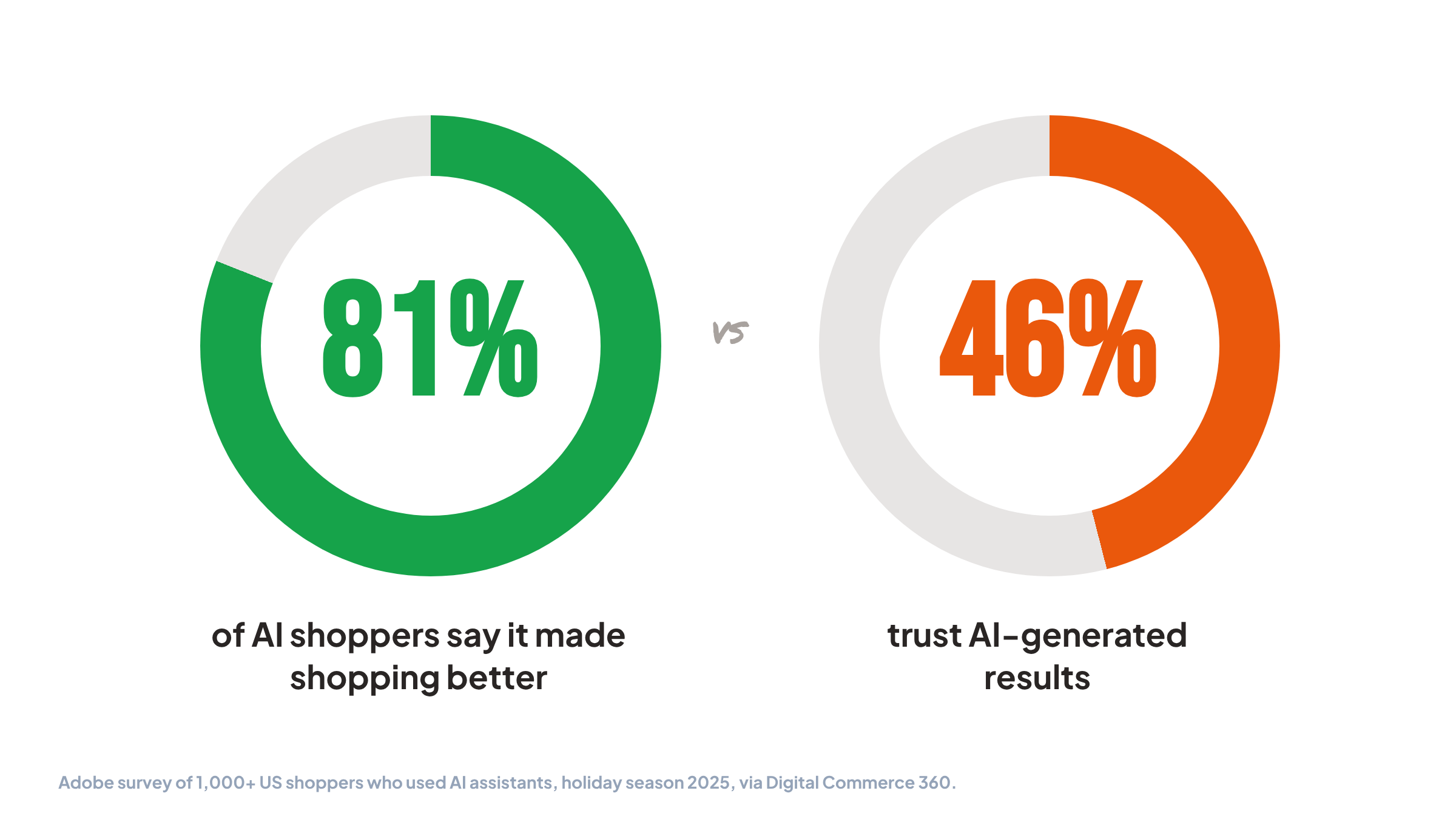
Generative AI sent 693.4% more traffic to US retail sites in the 2025 holidays (Adobe), but fewer than half of the shoppers using it trusted the answers: only 46% said they trust AI-generated results (Digital Commerce 360). For anyone building AI products, that gap is the most interesting number of the season. Usage is racing ahead of trust.
The usage curve
Adobe recorded a 1,300% jump in AI referrals to retail sites in the 2024 holiday season (Adobe). In 2025, Black Friday alone saw an 805% increase (Reuters), and Cyber Monday 670%. Adobe still describes the user base as modest, but the people who do use AI to shop arrive with intent: on Black Friday 2025 they converted 38% better than visitors from other sources.
The trust curve
Adobe's 2025 survey of more than 1,000 US shoppers found that 81% say AI improved their experience, 64% are satisfied with the links AI platforms suggest, and over 55% actively click them. Still, fewer than half trust the results. From a product point of view, people are using the output while hedging against it, which is exactly what happens when an answer is helpful but not verifiable.
Why sources are a feature, not a footnote
A shopping answer has a short shelf life. Prices change during the day, stock runs out, and model numbers get reused across regions. A model answering from training data alone can't know any of that. Showing the pages an answer came from does two jobs: it lets the user verify the claim, and it makes stale or wrong information visible instead of hidden behind confident text.
It also changes the interface. A wall of chat text is hard to audit. A layout that leads with the short answer, then breaks out the options, the trade-offs and the sources as separate sections, is easier to scan and much easier to check.
What the engagement data says
Adobe's 2025 holiday data shows how differently AI-referred visitors behave. They were 33% less likely to bounce, spent 45% longer on retail sites and viewed 13% more pages per visit, and revenue per visit from AI referrals rose 254% year over year (Digital Commerce 360). Retail saw the biggest growth of any sector, ahead of travel at +539% and financial services at +266%.
For product teams, that profile is a responsibility. These users arrive pre-decided. Whatever framing the answer gave them, the comparison it chose and the price it quoted, travels with them to the checkout. If the answer was stale or incomplete, the user often finds out only after paying.
A short design checklist for AI shopping answers
Lead with the decision, not the essay. A one-line answer with the main trade-off is easier to act on and easier to verify than five paragraphs of hedged text. Then separate the parts: options, trade-offs, price context and sources each get their own block, so users can audit one without rereading everything.
Make sources first-class. Link the actual pages used, show when they were fetched where possible, and make it obvious when the answer relies on general knowledge rather than a live page. On a day like Black Friday, freshness is part of correctness.
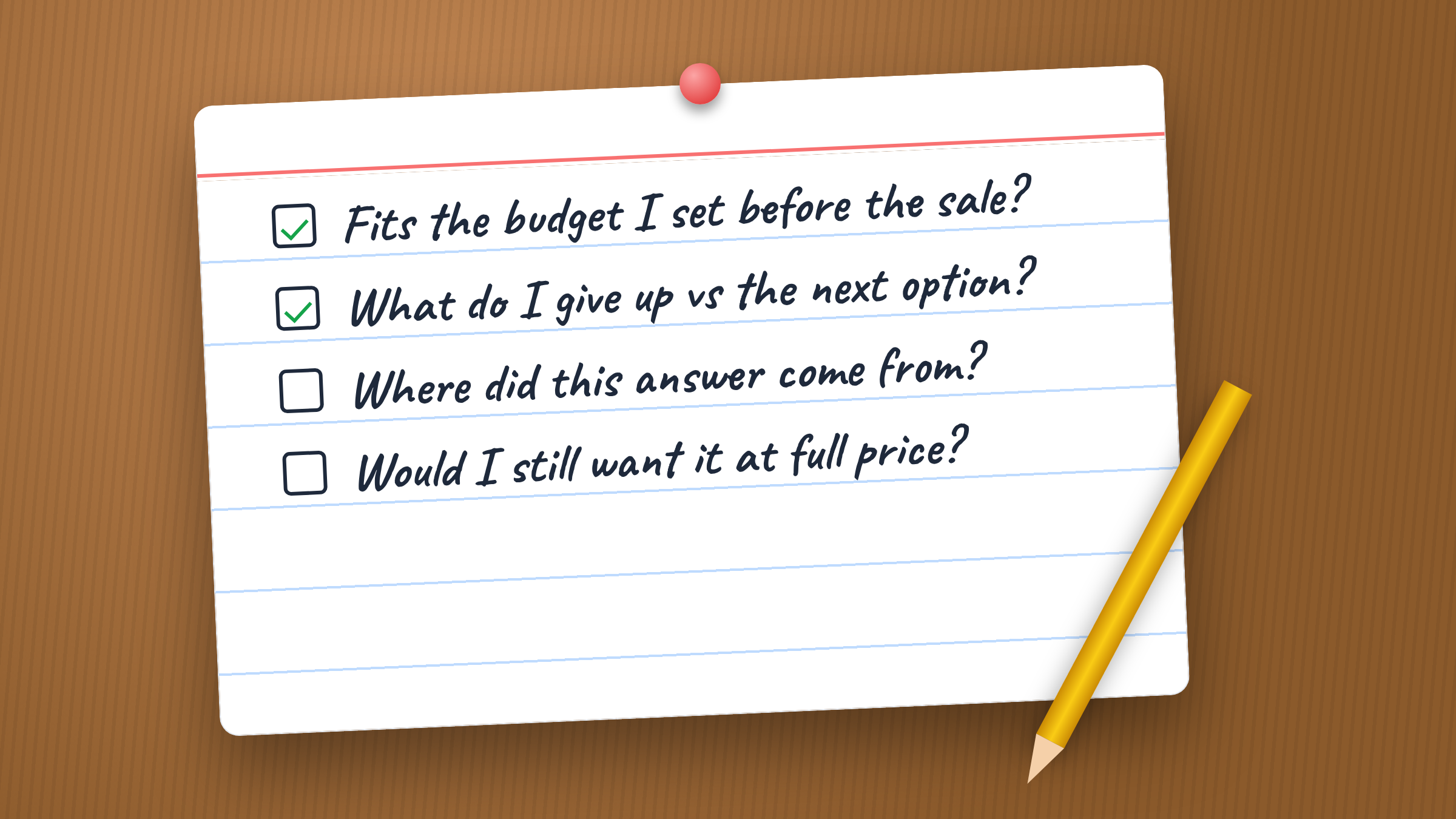
Respect the budget and the use case. If the user gives a price limit, every option should respect it, and if they describe how they'll use the product, the trade-offs should be about that use. Finally, say what you're unsure of. A visible "check this before you buy" isn't a weakness in a shopping tool. It's the line that makes the rest of the answer trustworthy.
One implementation of the idea
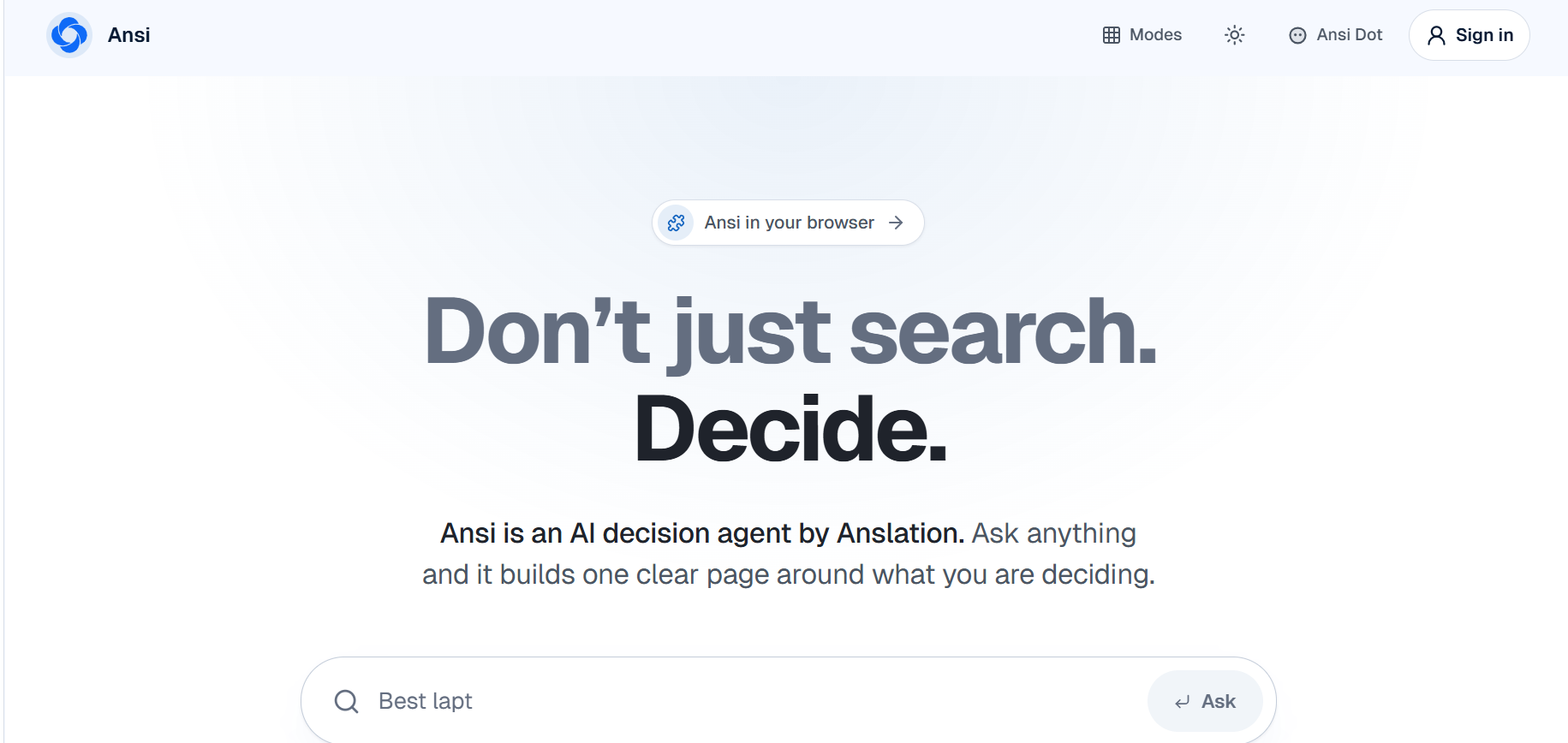
Ansi, the AI decision agent from Anslation, takes this approach. It reads the intent behind a question, searches the web when needed, and builds one page around the decision, with the short answer first, detail on request and the sources linked. For shopping questions, that means a shortlist within a budget and a comparison of trade-offs. The product page itself states that answers can still be wrong and should be checked, which is the honest default every AI shopping tool should ship with. You can try it without an account or as a browser extension.
Black Friday 2026 is on 27 November, and AI shopping traffic will very likely set another record. The tools that earn trust this season will be the ones that make checking easy.
About the author
- At Anslation, we are passionate about building innovative digital solutions that help businesses grow. We combine technology, creativity, and strategic thinking to develop software, strengthen brands, support marketing, and simplify business operations. Our goal is to turn ideas into practical solutions that create real value.
Comments
Join the discussionNo comments yet. Be the first to comment.